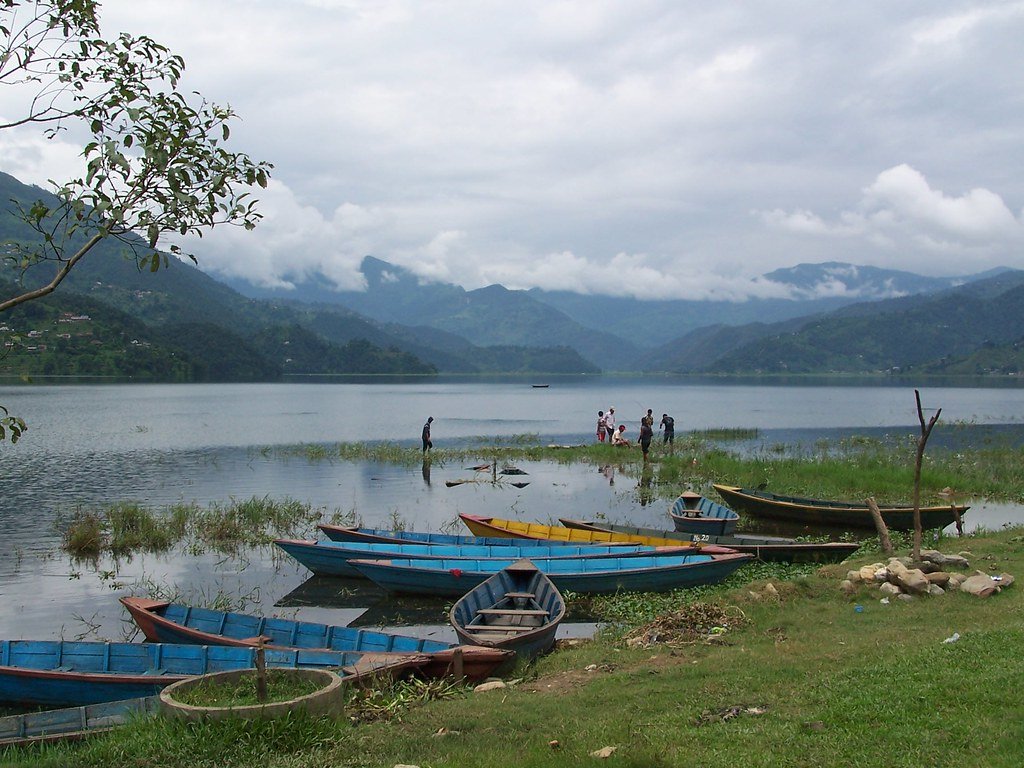
If Kathmandu is Nepal's cultural hub, Pokhara is its centre of adventure. The country's second city spreads along the shore of Phewa Lake in a tranquil valley ringed by forested hills, with the snow wall of the Annapurnas and the perfect fish-tail summit of Machhapuchhre (6,993 m) rising improbably behind, seemingly close enough to touch. It is one of the most beautiful settings of any town on earth.
Pokhara itself is not a monument-rich city — there are no famous temples, no old royal square — but that is rather the point. This is where trekkers come to rest before or after walking the Annapurna Circuit, the Annapurna Sanctuary, or the Mardi Himal trek, and where non-trekkers come simply to paraglide off Sarangkot, kayak on the lake, fly in to Jomsom, or drink lakeside beers while the mountains turn pink at sunset. The Lakeside district along Phewa's eastern shore is backpacker-central: a long strip of cafes, bakeries, outfitters, trekking agencies and guesthouses. At lower elevation than Kathmandu, Pokhara is warmer and more tropical in feel, with thick subtropical forest, orchids, and flocks of green parrots overhead.
Beyond the lake, the International Mountain Museum is a worthwhile half-day, the Gurkha Memorial Museum traces two centuries of Nepali warrior history, and Davis Falls and its underground sister cave at Gupteshwor make a strange geological pairing on the south edge of town. The old north end of Pokhara, around the Bindhyabasini Temple in Bagar, shows the city as it was before tourism.
The best time to come is October–November for clear mountain views after the monsoon; March–April is also good, with rhododendrons in bloom on the hills. June–September is monsoon, when clouds hide the peaks for days at a time.