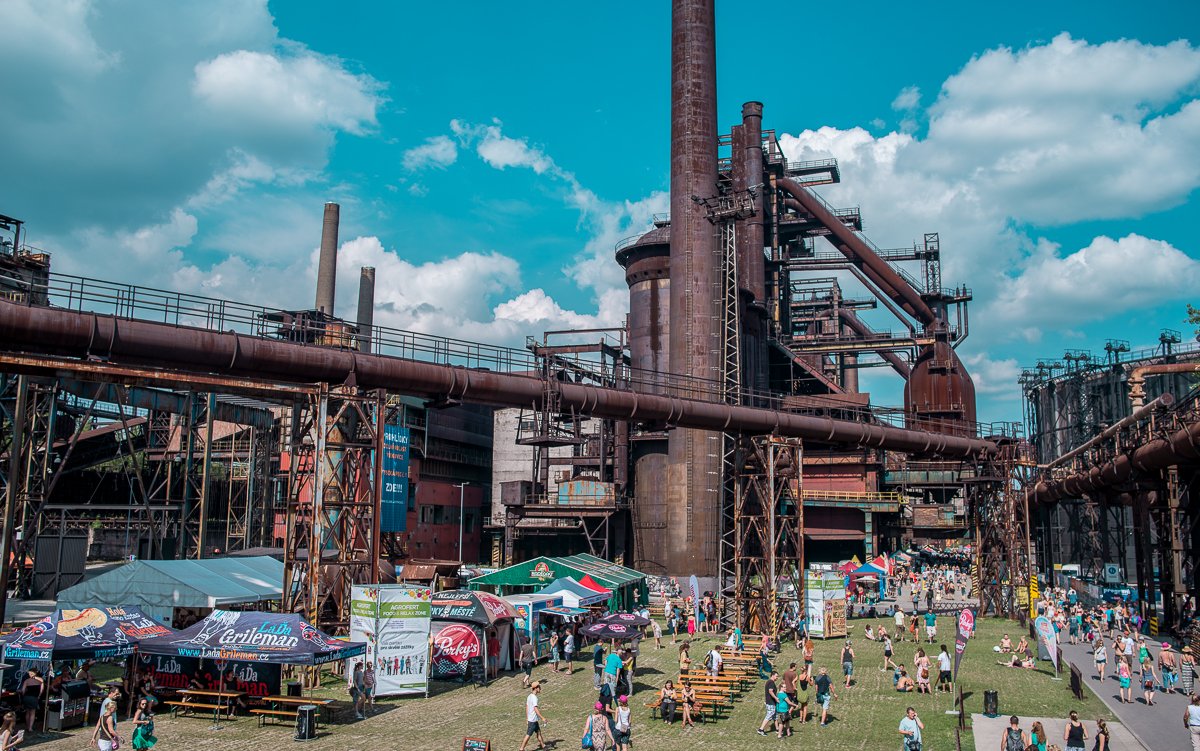
Ostrava is not the Czech city you picture first, and that is exactly why it is worth visiting. The country's third-largest city built its identity on coal and steel, and now that the furnaces have gone cold, all that industrial grit has been repurposed into one of Central Europe's most interesting cultural scenes. If Prague is the polished postcard, Ostrava is the city rolling up its sleeves.
The transformation is best seen at Lower Vítkovice, a former ironworks turned into a sprawling cultural complex with a concert hall inside a gas holder, a science centre in the old engineering workshops, and the Bolt Tower observation deck offering panoramic views across the city to the Beskydy Mountains. It is the kind of place that could only exist in a city unafraid of its own past.
Stodolní Street remains the social heart of Ostrava, a single street packed with more than sixty bars and clubs where you can drift from live jazz to Czech craft beer to underground techno without crossing a major road. The atmosphere is unpretentious and genuinely local, a world away from the tourist-oriented nightlife of Prague. Beyond Stodolní, the restored city centre — anchored on the cleaned-up Masaryk Square and the Cathedral of the Divine Saviour — is full of handsome turn-of-the-century architecture, quiet squares, and a growing number of independent cafes.
Ostrava is also a gateway city. The Beskydy and Jeseniky mountain ranges are less than an hour away, offering hiking, cross-country skiing, and small-town Moravian charm. The Landek Park Mining Museum takes visitors a thousand metres underground into a reconstructed coal face — the rawest taste of the city's working past. Colours of Ostrava, the country's biggest multi-genre music festival, draws international acts to the Vítkovice grounds every July and is reason enough to time a visit.