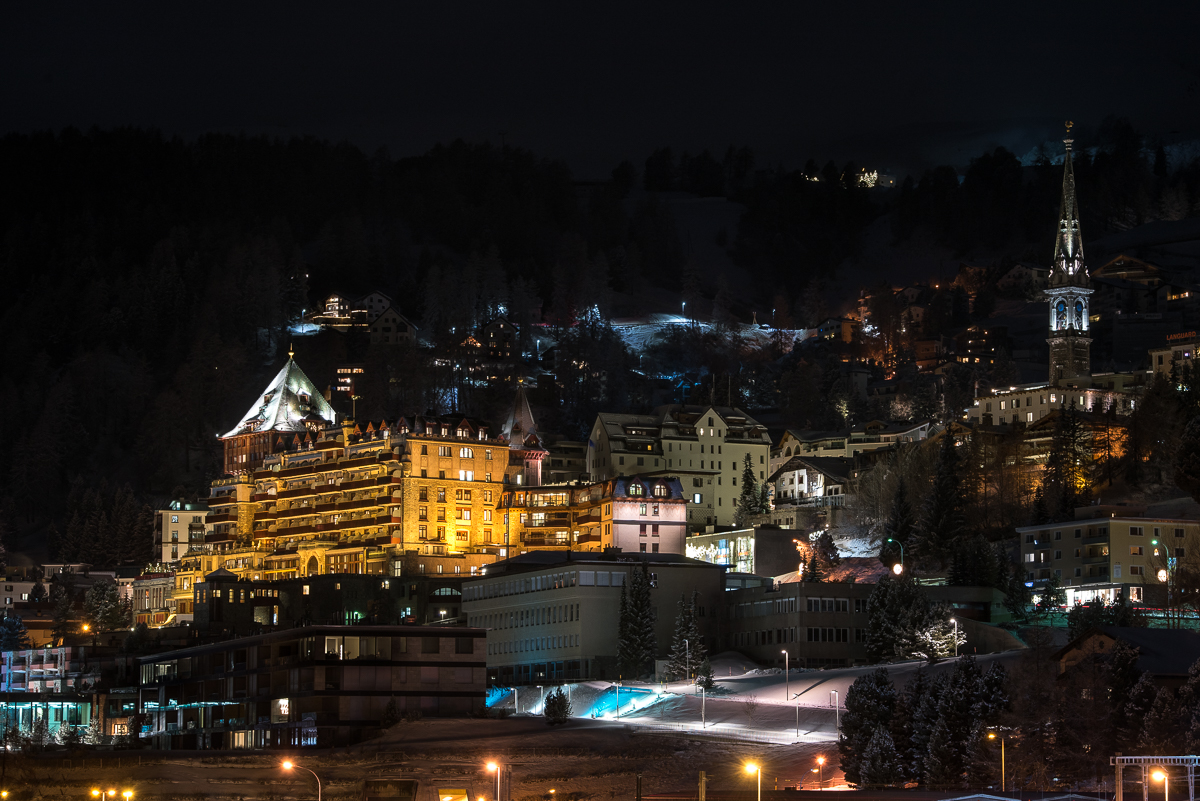
St. Moritz sits at 1,800 meters in the Upper Engadin valley, surrounded by glacier-capped peaks and alpine lakes. It has hosted the Winter Olympics twice, invented winter tourism, and remains one of the premier ski destinations in the Alps. The sun shines over 300 days a year, which for a place buried in snow half the time feels like a small miracle.
The skiing is the main draw. Over 350 kilometres of runs spread across Corviglia, Corvatsch, and Diavolezza, with terrain for complete beginners and expert off-piste skiers alike. Cross-country skiers get the Engadin valley's long, flat tracks. The Cresta Run, the world's oldest toboggan run, is here too, though it famously remains closed to women. The Olympia Bob Run is the last naturally iced bobsled track in the world, and you can ride it as a passenger.
Beyond the slopes, there is a quieter St. Moritz worth exploring. The Segantini Museum houses the Alpine paintings of Giovanni Segantini, and the Engadin Museum documents the valley's distinctive culture. Lake St. Moritz freezes solid in winter, becoming a venue for polo, cricket, and horse racing on ice. In summer, the same valley turns green and the hiking is superb — especially from Muottas Muragl, a viewpoint overlooking the full chain of Engadin lakes. The Bernina Express railway, a UNESCO World Heritage route, departs from here south to Tirano in Italy over one of the great mountain railways in Europe.
St. Moritz is expensive. There is no getting around that. But the setting is extraordinary, the infrastructure is impeccable, and the combination of sport, scenery, and crisp mountain air is hard to beat anywhere in the world.