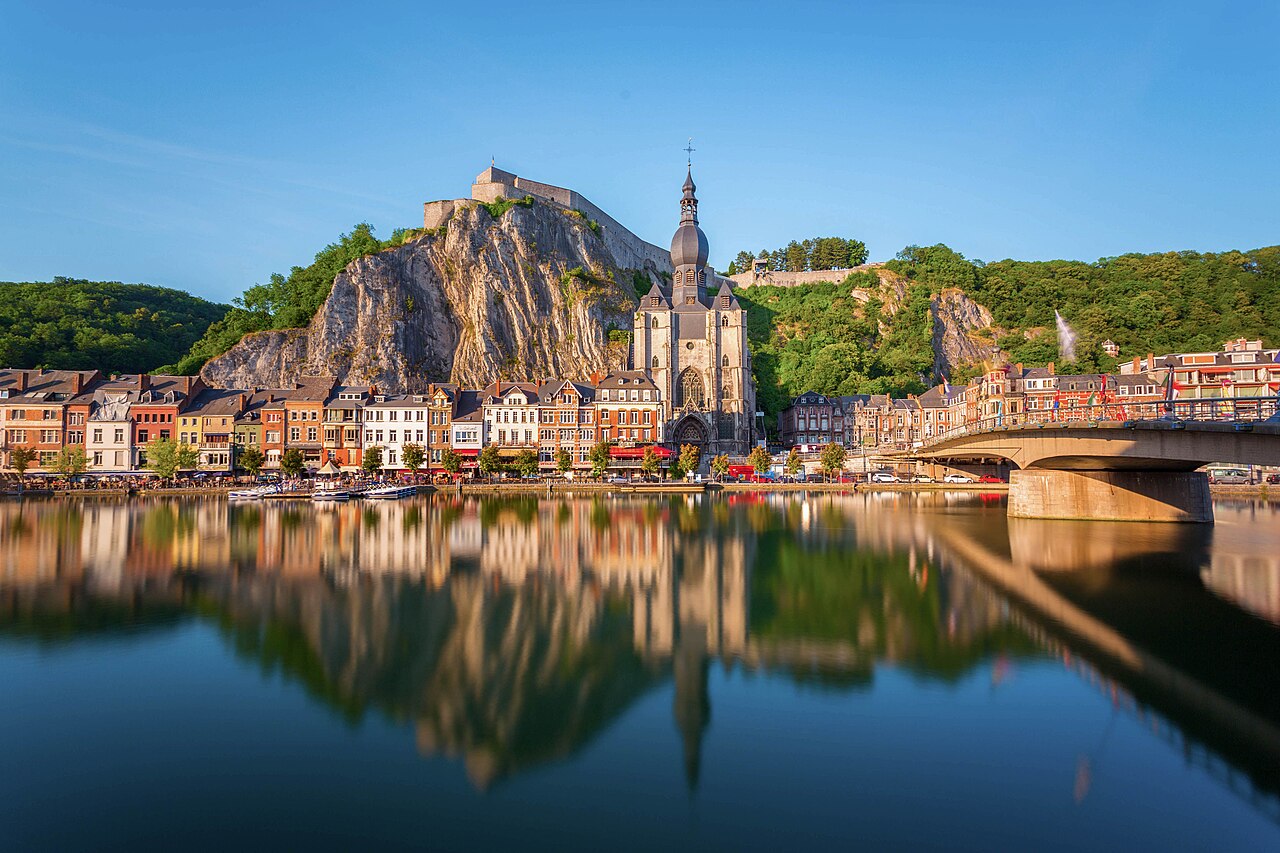
Dinant sits in a dramatic setting on the Meuse River, squeezed between limestone cliffs and the water. The town is dominated by its citadel, perched a hundred metres above the distinctive onion-domed Collegiate Church of Notre-Dame, and makes a fine base for exploring the Belgian Ardennes.
South of Dinant the Meuse cuts a deep trench through the Ardennes plateau. The most spectacular stretch is at Freyr, six kilometres downstream, where the sheer Rocks of Freÿr on one bank face a Renaissance castle and classical gardens on the other. Boat trips along the river run throughout the summer, and kayaking down the River Lesse from Houyet to Anseremme — past the dramatically perched Walzin Castle — is the area's most popular outdoor activity.
Dinant is also the birthplace of Adolphe Sax, inventor of the saxophone — a fact the town celebrates with saxophone-shaped benches, a small museum, and the Charles de Gaulle bridge lined with 28 painted saxophones honouring each EU member state. The surrounding countryside offers cycling, walking, and caves; the show cave of La Merveilleuse, 500 metres from the railway station, has impressive stalactites and underground waterfalls.
For day trips, the water gardens at Annevoie and the storybook Château de Vêves at Celles are within 15 km, and Namur — Wallonia's capital — is a 30-minute train ride north. Don't leave without trying a couque de Dinant, the local honey biscuit said to have been invented during the 1466 siege.