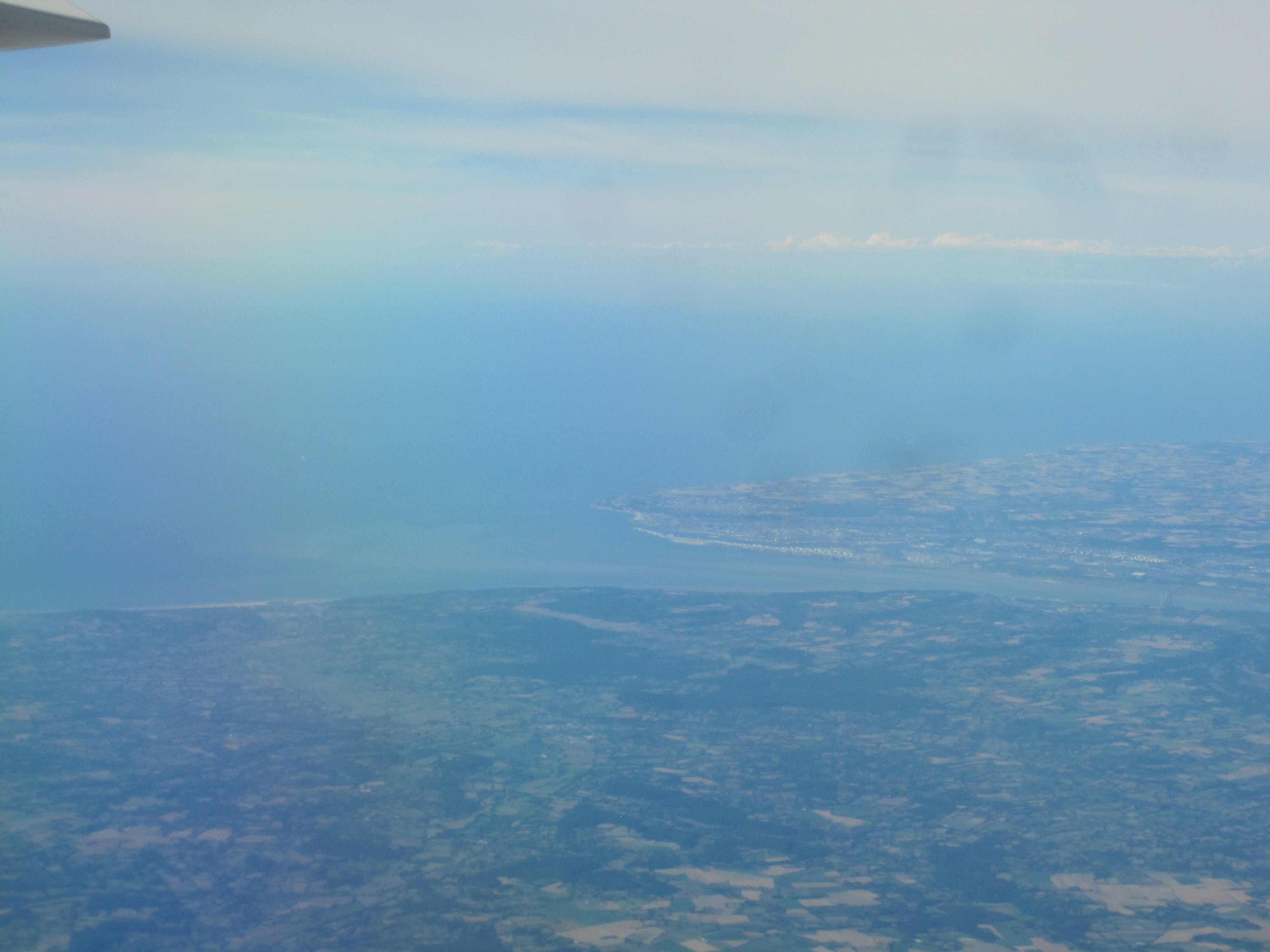
Le Havre is France's second-largest port and one of the country's most architecturally distinctive cities. Bombed almost flat in September 1944, it was rebuilt from scratch by the modernist architect Auguste Perret between 1945 and 1964 — a singular act of urban planning that earned it UNESCO World Heritage status in 2005. Most visitors pass through on their way to or from Britain; that's a mistake.
The city centre is a deliberate grid of wide boulevards and concrete buildings softened by Perret's characteristic use of fluted columns and generous light wells. It can feel austere at first glance, but spend a morning walking from the Église Saint-Joseph — whose 107-metre tower is filled with 12,768 pieces of coloured glass — down the ceremonial axis of Avenue Foch to the sea front, and the ambition of the project becomes clear. In the middle of the grid, rising like a concrete eruption, is Le Volcan, the performing arts centre designed by Oscar Niemeyer in 1982.
The waterfront has been transformed by a striking contemporary addition: the MuMa (Musée d'Art Moderne André Malraux) sits right on the water, its aluminium-and-glass "Beacon" lantern marking it from across the harbour. The collection inside is the second-largest impressionist holding in France after the Orsay, strong on Boudin and Monet, both of whom painted this coast obsessively. The nearby Bassin du Commerce links the old commercial heart to the sea, and the Jardins Suspendus occupy the old fort at Sainte-Adresse.
The Côte d'Albâtre — the chalk cliff coast — begins right here. Étretat, with its famous arches eroded by the sea, is only 30 km north. Le Havre itself has a long sandy beach stretching north from the port toward Sainte-Adresse, with views back to the Seine estuary and the Pont de Normandie bridge.
Le Havre is less than 200 km northwest of Paris, two hours by train from Saint-Lazare station.