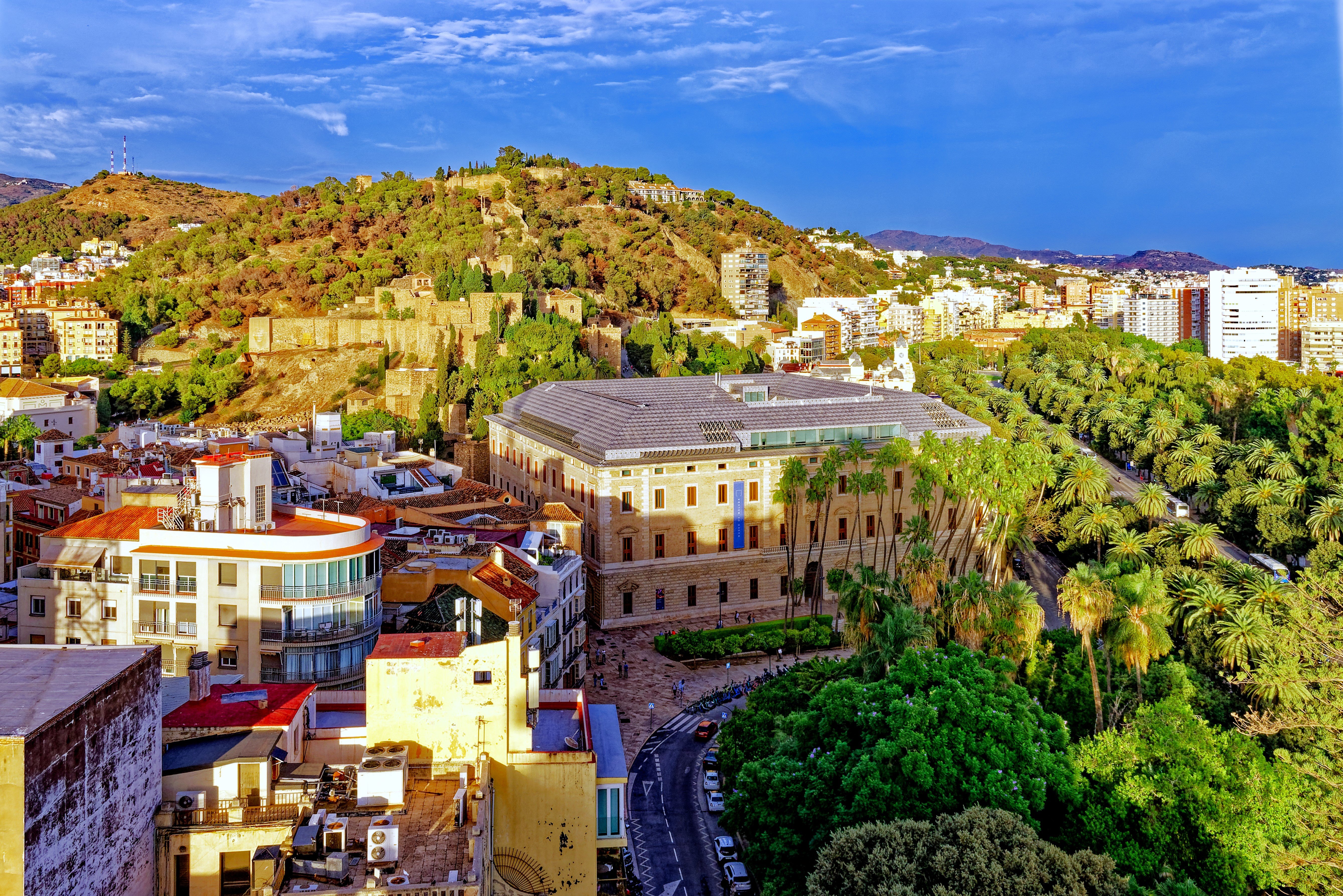
Málaga is the unsung capital of the Costa del Sol — a working port city with a 3,000-year history, a Moorish fortress on its hill, and Picasso's birthplace on its central square. For decades it was treated as the airport you flew into on the way to the beach resorts. That is changing fast: a string of new museums, a tidied-up old town, and a polished waterfront have turned it into one of the most rewarding short-break cities in southern Spain.
The compact historic centre wraps around the Cathedral and the Alcazaba, a beautifully preserved Moorish fortress connected by a long curtain wall to the higher Gibralfaro Castle — the climb up is steep but the view back down over the bullring, the port, and the Mediterranean is the definitive Málaga photograph. At the foot of the fortresses stands the Roman Theatre, lost for centuries and only excavated in 1951. Below, the old town converges on Plaza de la Merced, where Picasso was born in 1881 in the house that is now the Casa Natal. The Picasso Museum a few streets away holds 200-plus works donated by his family. The Museo de Málaga in the restored Customs Palace is the largest museum in Andalusia by collection size.
Eat fritura malagueña — a paper cone of tiny fried fish — at one of the chiringuitos (beach shacks) in El Palo and Pedregalejo, the old fishing barrios east of the centre. The easiest beach is La Malagueta, below the bullring. Drink the local sweet wine at Antigua Casa de Guardia or the sprawling El Pimpi near the Picasso Museum. The Centre Pompidou on the waterfront and the Carmen Thyssen Museum in the old town fill the culture calendar alongside the city's own collections.
Málaga is also the gateway to the rest of the province — Ronda and its dramatic gorge, the white town of Antequera, the prehistoric caves of Nerja, and the resort strip of the Costa del Sol all lie within an hour or two by car or train.