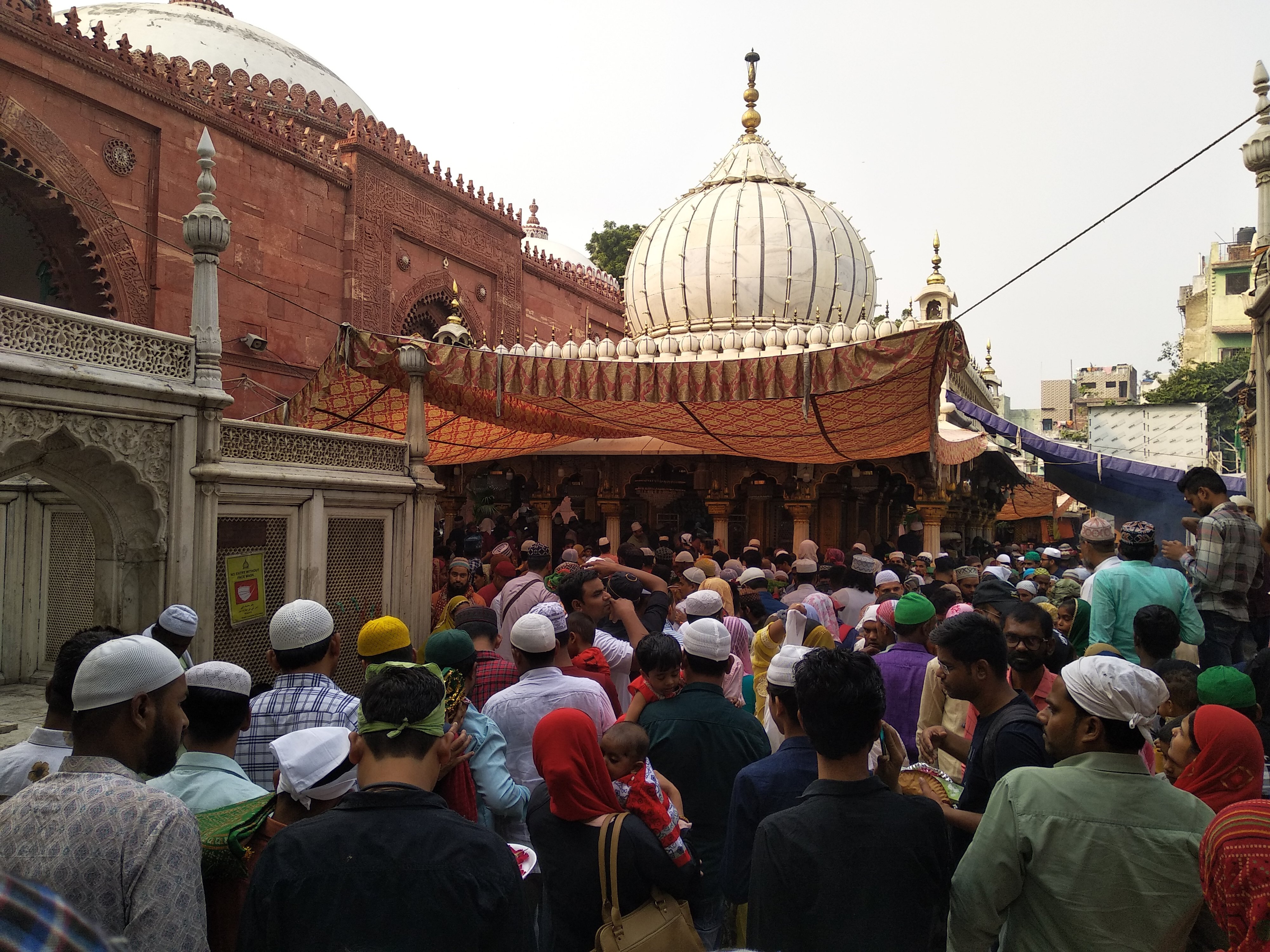
The neighbourhood centred on the Nizamuddin Dargah — the shrine of the 14th-century Sufi saint Nizamuddin Auliya, one of the most important Islamic pilgrimage sites in South Asia. On Thursday evenings (and increasingly other evenings), the alley leading to the shrine fills with pilgrims and the surrounding courtyards come alive with qawwali — the Sufi devotional music that the Nizamuddin musicians are considered among the finest practitioners of anywhere in the world.
The neighbourhood clusters tightly around the dargah: lanes of flower sellers, kebab stalls, and small shops selling religious goods lead in from all sides. Immediately adjacent lies Humayun's Tomb — the 16th-century Mughal mausoleum that served as the architectural precursor to the Taj Mahal, set in formal Persian gardens and one of the finest monuments in Delhi. The contrast between the busy, chaotic shrine and the serene formal gardens of the tomb is itself worth experiencing.